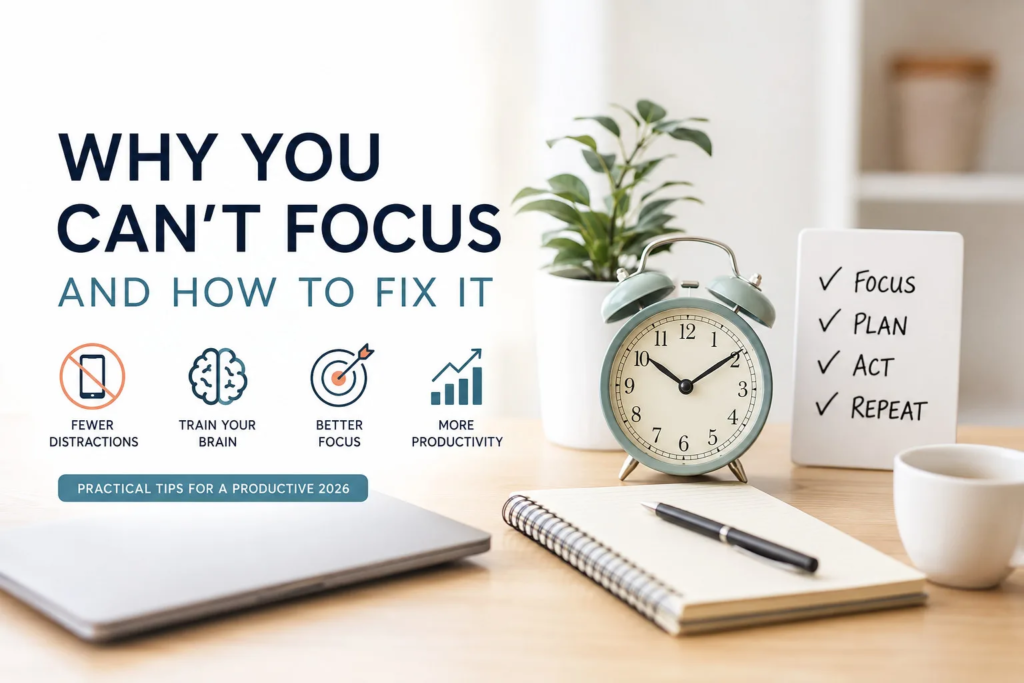
Productivity is fundamentally not about working longer hours or staying constantly busy throughout the day. Rather, true productivity is the art of completing high-value tasks efficiently while protecting a healthy, sustainable balance between work and personal life. Whether you operate as a student, entrepreneur, freelancer, or corporate leader, mastering productivity principles enables you to hit your goals faster while significantly cutting down daily stress.
In 2026, advanced technology and intelligent automated platforms have completely transformed how high performers operate, yet ultimate success still hinges on solid personal habits, intentional daily planning, and laser-like cognitive focus. By mastering core time-management mechanics, you can transform your daily time investment and achieve far more with less effort.
What Genuine Productivity Really Means
At its core, productivity refers to using your time, energy, and resources to produce maximum value with minimal waste. Being productive does not mean burning yourself out with non-stop task-switching; it means channeling your primary focus toward activities that generate the greatest long-term impact.
Productive individuals operate differently because they:
- Plan their daily workload strategically long before jumping into action
- Systematically eliminate cognitive distractions and physical interruptions
- Protect their high-energy hours for deep, uninterrupted work
- Consistently review their output to refine their daily workflows
Developing these intentional operational habits builds a foundation for long-term personal and professional growth.
Why Productivity Is Essential for Well-Being
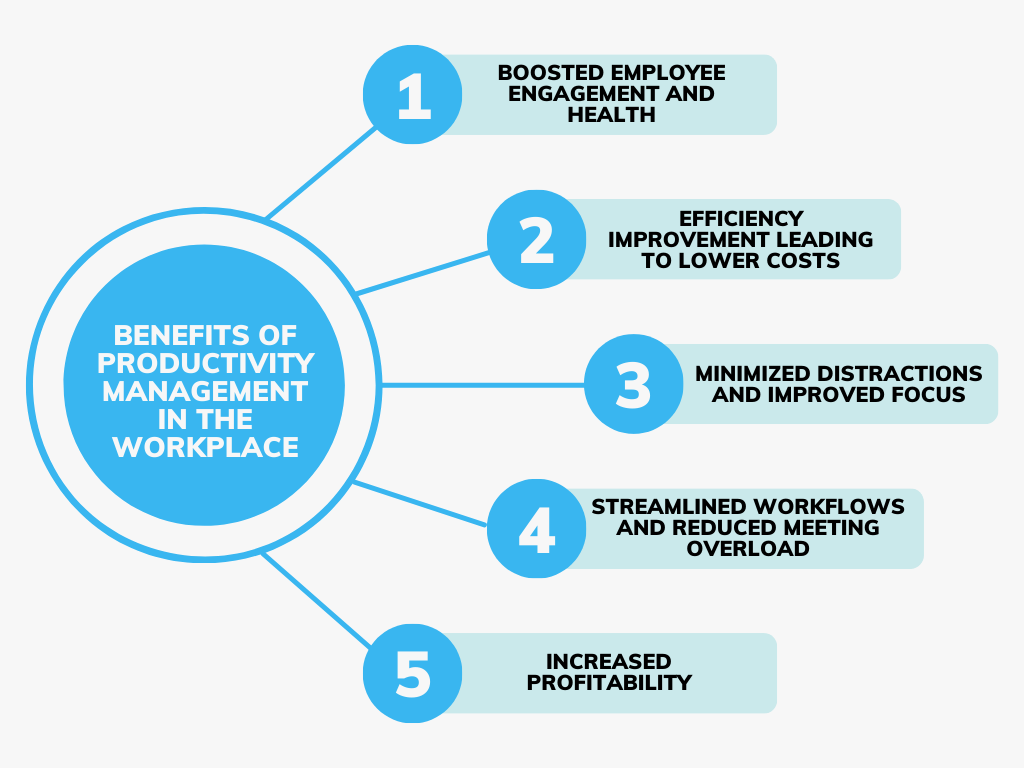
Mastering your daily workflow delivers profound benefits that go far beyond checking off items on a simple to-do list. It grants you greater autonomy over your schedule, directly reducing chronic workplace anxiety.
Major life benefits include:
- Dramatically reduced stress levels through predictable task management
- Substantially higher quality of output in creative and analytical work
- Sustained intrinsic motivation and reduced mental fatigue
- Sharper decision-making capabilities throughout demanding workdays
- A healthy, well-protected boundary between professional and home life
- Accelerated long-term career progression and skill development
Effective time management transforms frantic busyness into calm, purposeful achievement.
1. Establish Clear and Actionable Goals
Every highly productive day begins with unambiguous, well-defined target objectives. Setting explicit and realistic goals provides a sharp mental directional compass, preventing you from drifting into low-value, passive activities.
Maximize goal execution by:
- Deconstructing massive, intimidating projects into micro, actionable steps
- Defining concrete metrics so you know exactly when a task is completed
- Establishing hard deadlines to create healthy operational momentum
- Reviewing your primary targets daily to align moment-to-moment choices
Breaking large projects into bite-sized milestones removes the psychological friction that triggers procrastination.
2. Prioritize High-Impact Tasks Ruthlessly

Not every item sitting on your desk carries the same intrinsic value or strategic importance. Learning to separate urgent busywork from truly high-impact leverage tasks is the hallmark of effective productivity.
Execution strategies for task prioritization:
- Organize your workload using frameworks like the Eisenhower Matrix.
- Identify the top 20% of tasks that generate 80% of your desired results.
- Tackle your most demanding task first thing in the morning when mental energy peaks.
- Resist the urge to answer low-priority requests during dedicated focus blocks.
Tackling your primary objective first guarantees that even an interrupted day yields meaningful progress.
3. Design a Structured Daily Schedule
A well-crafted daily plan removes decision fatigue by mapping out exactly what needs to happen next. Spending just 10 minutes planning your day eliminates hours of wasted time and aimless task-switching.
Effective daily planning incorporates:
- Setting fixed time blocks for deep, uninterrupted analytical work
- Grouping similar administrative tasks into single batching sessions
- Scheduling dedicated windows for checking and processing communications
- Building buffer periods between commitments to absorb unexpected delays
Operating from a clear schedule keeps you proactive rather than constantly reacting to external demands.
4. Systematically Eliminate Modern Distractions

Distractions act as a major drain on cognitive performance, fracturing your attention span and inflating the time required to finish basic tasks. Every interruption forces your brain to pay a heavy “context switching” tax.
Proven tactics to protect your focus:
- Silencing non-essential push notifications across all mobile and desktop devices
- Establishing strict hours for reading and replying to emails
- Creating a clean, physical workspace free from clutter
- Communicating your deep-work focus windows to colleagues and family
Guarding your mental focus creates the ideal environment for deep, high-level creative work.
5. Master Proven Time Management Frameworks
Structured time-management techniques provide the guardrails necessary to maintain intense focus without suffering mental exhaustion. Single-tasking—focusing on one isolated item at a time—consistently beats multitasking in speed, accuracy, and quality.
High-performance time frameworks include:
- The Pomodoro Technique: Working for 25 focused minutes followed by a 5-minute restorative break.
- Time Blocking: Dividing your calendar into distinct blocks dedicated strictly to specific activities.
- Task Batching: Executing similar routine actions—such as invoicing or drafting emails—all in one session.
Structuring your hours consciously allows you to produce superior work in far less time.
6. Incorporate Strategic Rest and Breaks
Working continuously without pause inevitably leads to cognitive decline, heightened error rates, and mental burnout. Short, intentional breaks act as essential biological reset points that restore focus and fuel creative thinking.
Maximize your break quality by:
- Stepping completely away from digital screens and monitors
- Engaging in light physical movement or brief stretching
- Practicing deep breathing or short mindfulness exercises
- Hydrating and stepping outdoors for natural sunlight exposure
Treating rest as an essential component of high performance prevents burnout and sustains output.
7. Maintain an Optimized Digital Workspace

In an era of remote and digital work, a chaotic digital environment induces as much stress as a messy physical desk. Organizing your digital assets eliminates friction, making files instantly searchable and workflows smooth.
Key digital organization protocols:
- Structuring logical, standardized folder hierarchies across local and cloud drives
- Clearing temporary files from your Downloads folder and desktop screen daily
- Maintaining zero-inbox techniques through aggressive archiving and labeling
- Standardizing descriptive file-naming conventions across all projects
A clean digital environment lowers mental strain and keeps your focus centered on real execution.
8. Deploy Productivity Tools with Intention
Modern digital software offers unprecedented capabilities for organizing projects, automating workflows, and syncing team efforts. However, accumulating too many overlapping applications creates unnecessary complexity and digital bloat.
To optimize your software toolkit:
- Select a single, flexible task management application as your central command center.
- Maintain one unified digital calendar for all professional and personal commitments.
- Use centralized note-taking apps to capture ideas and project research seamlessly.
- Audit your software ecosystem regularly to remove redundant or distracting apps.
Focus on mastering a few core, reliable tools that genuinely streamline your existing routines.
9. Build Supporting Healthy Daily Habits
Your cognitive performance, focus duration, and resilience are direct products of your baseline physical and mental health. Ignoring physical well-being severely undermines your ability to maintain output over long periods.
Essential wellness pillars for productivity:
- Securing 7 to 9 hours of quality, uninterrupted sleep every night
- Maintaining steady hydration throughout your working hours
- Fueling your body with nutrient-dense, whole food meals
- Engaging in consistent physical exercise to boost oxygen flow and mental sharpness
Prioritizing fundamental biological needs equips your brain with the stamina required for elite focus.
10. Conduct Regular Self-Reviews and Audits

Sustained productivity requires frequent self-reflection to determine which routines yield results and which need fine-tuning. Periodic performance reviews allow you to correct course before bad habits harden into permanent routines.
Implement a weekly review process to:
- Assess completed tasks against your original goals
- Analyze moments where you succumbed to procrastination or distraction
- Evaluate the accuracy of your original time estimates
- Adjust your schedule and priorities for the upcoming week
Continuous iteration turns time management from a rigid set of rules into a flexible, personal operating system.
Common Productivity Traps to Avoid
Steer clear of these counterproductive habits that masquerade as real progress while quietly sabotaging your output:
- Mistaking constant busyness for meaningful progress
- Attempting to multitask across complex, cognitive projects
- Failing to say no to low-priority requests and external commitments
- Skipping planned breaks to push through cognitive fatigue
- Delaying action until conditions feel completely “perfect”
- Allowing unread emails and messages to dictate your daily priorities
Recognizing these traps enables you to pivot back toward genuine high-value execution.
Essential Practices for Long-Term Consistency
Building a lifetime of high productivity relies on steady consistency rather than occasional short bursts of extreme effort. Sustainable success comes from embedding small, positive habits deeply into your identity.
Long-term execution guidelines:
- Focus on continuous 1% daily improvements rather than radical overhauls.
- Protect your daily deep-work hours with unwavering discipline.
- Master the habit of starting, bypassing initial psychological resistance.
- Celebrate small consistency milestones to reinforce positive neural feedback.
Consistency transforms simple daily actions into extraordinary long-term achievements.
Productivity Transformations

The modern workplace continues to evolve rapidly, with technological innovations making high-level execution more streamlined than ever.
Prominent modern productivity shifts include:
- AI-driven assistants automating routine drafting, research, and analysis
- Smart calendar algorithms that optimize schedules based on personal energy patterns
- Intelligent task management platforms predicting project timelines and bottlenecks
- Hyper-personalized productivity analytics tracking focus metrics and context shifts
- Asynchronous communication setups replacing unnecessary real-time meetings
Embracing these modern workflow innovations liberates your time for creative, strategic, and high-value work.