
Productivity Improve is not simply about completing more tasks in less time. It is about using your time, energy, and resources effectively to achieve meaningful results. Whether you are a student managing assignments, a professional handling workplace responsibilities, a freelancer working with multiple clients, or a business owner managing daily operations, productivity plays an important role in reaching your goals.
In today’s fast-moving digital environment, staying organised and maintaining focus can be challenging. Constant notifications, multiple responsibilities, unexpected interruptions, and increasing workloads can make even simple activities feel overwhelming. This is why developing effective productivity habits has become more important than ever.
Fortunately, modern technology offers several ways to simplify daily routines. Digital planners, task management applications, AI assistants, calendar tools, and automation platforms help individuals organise responsibilities and reduce repetitive work.
In 2026, productivity is increasingly focused on smarter working rather than longer working hours. People are exploring time management techniques, flexible schedules, digital workflows, and healthier work habits to improve their overall performance.
Whether you want to manage your daily schedule, complete projects efficiently, or improve your personal routine, understanding productivity fundamentals can help you create a more organised and balanced lifestyle.
What Is Productivity and Why Does It Matter?

Productivity refers to how effectively you use available time and resources to complete tasks and achieve specific objectives. It involves planning activities, setting priorities, managing distractions, and maintaining consistent progress.
Being productive does not mean staying busy throughout the day. Instead, it means identifying which activities matter most and giving them the appropriate attention.
For example, spending three hours completing an important project may be more productive than spending an entire day switching between unnecessary activities.
Why productivity is important:
- Better time management: Helps organise daily responsibilities and deadlines.
- Improved focus: Encourages attention towards important activities.
- Reduced stress: Makes workloads easier to manage through proper planning.
- Consistent progress: Helps individuals work towards long-term goals.
- Higher efficiency: Reduces unnecessary steps and repetitive activities.
- Better work-life balance: Creates more opportunities for personal activities and relaxation.
Different Types of Productivity
Productivity is not limited to professional responsibilities. It can be applied to different areas of everyday life.
1. Personal Productivity

Personal productivity focuses on managing individual responsibilities, habits, and everyday activities. It includes organising routines, setting personal goals, maintaining healthy habits, and completing household tasks.
For example, preparing a daily schedule, organising your room, planning meals, and setting aside time for exercise can improve personal productivity.
2. Workplace Productivity
Workplace productivity involves completing professional responsibilities efficiently while maintaining quality.
Employees can improve workplace productivity by organising meetings, setting priorities, managing deadlines, communicating effectively, and reducing unnecessary interruptions.
Businesses can also introduce structured workflows and digital tools to improve team coordination.
3. Academic Productivity
Students need effective productivity habits to balance lectures, assignments, examinations, projects, and personal activities.
Creating study schedules, organising notes, setting revision goals, and using focused study sessions can make academic responsibilities more manageable.
4. Digital Productivity
Digital productivity focuses on using technology to complete tasks efficiently. It includes managing files, automating repetitive activities, collaborating online, organising information, and using software to improve workflows.
AI assistants, cloud storage, project management platforms, and digital calendars are common examples of productivity solutions.
Best Productivity Techniques to Improve Your Daily Routine
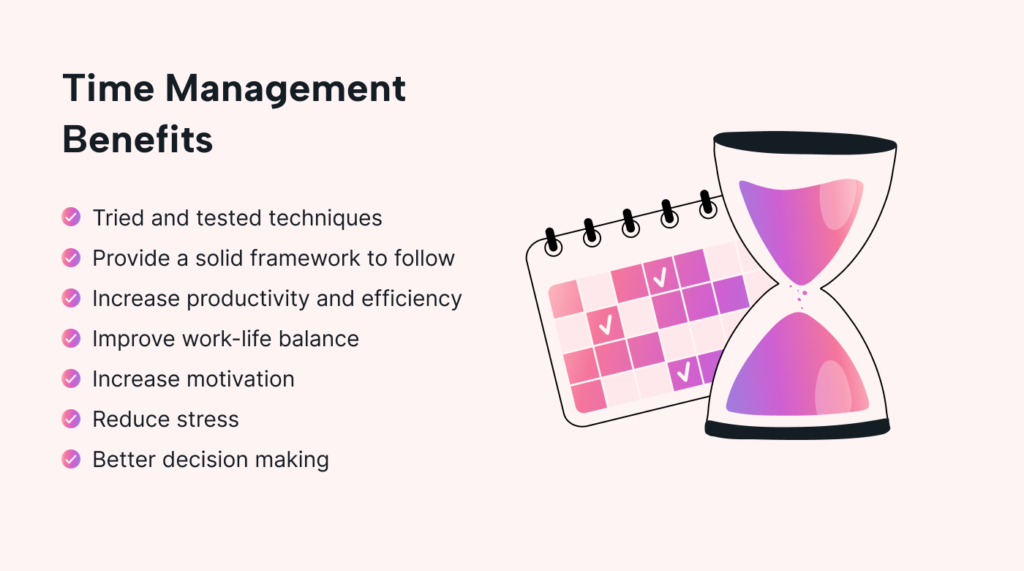
Developing the right habits can make a significant difference in how you manage your time. Instead of trying to change everything at once, start with simple techniques and gradually build a routine that works for you.
1. The Pomodoro Technique
The Pomodoro Technique is a time management method that divides work into focused sessions followed by short breaks.
A traditional approach involves working for 25 minutes and taking a five-minute break. After completing four sessions, you can take a longer break.
How to Focus in a Distracted World | Simple Focus Guide – Studio Hardeep
This technique can be particularly useful for students, writers, and professionals who struggle with distractions or maintaining concentration.
2. Time Blocking
Time blocking involves assigning specific periods to different activities throughout the day.
For example, you might reserve the morning for important work, the afternoon for meetings, and the evening for personal responsibilities.
This approach creates structure and helps prevent multiple activities from competing for your attention.
3. The Eisenhower Matrix
The Eisenhower Matrix helps organise tasks according to their urgency and importance.
| Task Category | Meaning | Recommended Action |
|---|---|---|
| Urgent and Important | Needs immediate attention | Do it now |
| Important but Not Urgent | Supports long-term goals | Schedule it |
| Urgent but Not Important | Requires attention but has lower personal value | Delegate where possible |
| Neither Urgent nor Important | Offers limited value | Remove or minimise |
This method helps individuals avoid spending too much time on activities that do not contribute significantly to their goals.
4. The Two-Minute Rule
The Two-Minute Rule encourages you to complete a task immediately if it takes less than two minutes.
For example, replying to a simple message, organising a small document, or adding an appointment to your calendar can be completed quickly rather than postponed.
However, avoid allowing small tasks to interrupt important focus sessions.
5. Set SMART Goals
SMART goals are Specific, Measurable, Achievable, Relevant, and Time-bound.
Instead of setting a vague goal such as becoming more productive, create a specific objective such as completing three important project tasks before the end of the working day.
Clear goals make progress easier to measure and encourage consistent improvement.
Best Productivity Tools to Organise Your Work

Technology has made productivity management easier through applications that help individuals plan activities, track progress, collaborate, and automate workflows.
Here are some popular productivity tools worth exploring.
| Tool | Main Purpose | Best For |
|---|---|---|
| Notion | Notes and workspace organisation | Personal and team planning |
| Trello | Visual task management | Project tracking |
| Todoist | Task lists and reminders | Daily planning |
| Google Calendar | Scheduling and time management | Appointments and routines |
| Slack | Team communication | Workplace collaboration |
| Microsoft To Do | Task organisation | Personal productivity |
| ChatGPT | AI-assisted work | Research, writing, and brainstorming |
| Zapier | Workflow automation | Repetitive digital tasks |
a simple student dashboard Template | Notion Marketplace
Asana vs. Trello: 2025 Comparison (Features, Pricing)
Trello vs. Todoist: Which should you use?
How to Choose the Right Productivity Tool
Not every application is suitable for every person. Before choosing a platform, consider your requirements and daily workflow.
- Choose a task manager if you frequently forget deadlines.
- Use a calendar application if your schedule includes meetings and appointments.
- Explore note-taking software if you regularly collect research and ideas.
- Consider collaboration tools if you work with multiple people.
- Try automation platforms if repetitive digital tasks consume significant time.
You can also explore AltFTool to discover AI tools, design resources, and productivity solutions that can support different digital workflows.
How Artificial Intelligence Is Improving Productivity

Artificial Intelligence is changing how people organise work and complete everyday tasks. AI-powered applications can help with writing, research, scheduling, summarisation, data analysis, and content creation.
Instead of manually completing every activity, users can rely on AI assistance for certain repetitive or time-consuming processes.
Automate Your Day with AI in 7 Steps | ThinkAutomated
1. AI-Assisted Writing
AI writing assistants can help generate content ideas, prepare outlines, improve grammar, and summarise information.
Students can use them to understand complex subjects, while professionals can use them to organise reports and draft communications.
2. Smart Scheduling
AI-powered scheduling solutions can help organise appointments, identify available time slots, and manage calendar activities.
These features can reduce the effort involved in coordinating meetings and maintaining busy schedules.
3. Automated Workflows
Automation platforms can connect different applications and perform repetitive actions.
For example, a workflow might automatically save email attachments to cloud storage or send notifications when a task is completed.
4. Faster Research and Information Management
AI research assistants can help summarise documents, organise information, and identify useful starting points for further research.
However, important facts should always be verified using reliable sources.
5. Content and Creative Assistance
Content creators can use AI tools to brainstorm ideas, generate visual concepts, prepare scripts, and organise publishing schedules.
These tools can support creativity while allowing users to maintain their own voice and judgement.
Common Productivity Mistakes to Avoid

Even with good planning and modern tools, certain habits can reduce productivity. Recognising these mistakes can help you develop a more effective routine.
1. Multitasking Too Often: Switching between different activities can interrupt concentration. Focus on one important task at a time whenever possible.
2. Poor Planning: Starting the day without priorities can lead to unnecessary work. Prepare a simple task list before beginning.
3. Ignoring Breaks: Working continuously without rest can affect concentration and energy. Include regular breaks in your schedule.
4. Spending Too Much Time on Tools: Downloading multiple productivity applications does not automatically improve efficiency. Choose a small set of tools that genuinely support your workflow.
5. Setting Unrealistic Goals: Planning more activities than you can reasonably complete creates unnecessary pressure. Set achievable daily targets.
6. Ignoring Distractions: Frequent notifications and unnecessary browsing can interrupt important activities. Create a focused working environment.
Practical Tips to Become More Productive Every Day
Improving productivity does not require a complicated system. Small, consistent changes can create meaningful improvements over time.
| Productivity Habit | How It Helps |
|---|---|
| Plan your day in advance | Provides a clear direction |
| Identify three important tasks | Keeps attention on priorities |
| Start with difficult activities | Helps tackle demanding work earlier |
| Limit unnecessary notifications | Reduces interruptions |
| Organise your workspace | Makes essential items easier to find |
| Take regular breaks | Supports concentration |
| Review daily progress | Identifies areas for improvement |
| Maintain a consistent routine | Encourages long-term habits |
Additional pointers for better productivity:
- Keep your workspace clean and organised.
- Avoid checking messages during important focus sessions.
- Break large projects into smaller activities.
- Set realistic deadlines for individual tasks.
- Maintain a healthy balance between work and rest.
- Review your progress at the end of each week.
The Future of Productivity: Smart Work and Digital Transformation

Productivity is evolving as digital technologies introduce new ways to organise responsibilities and manage information.
In the coming years, AI-powered assistants, intelligent automation, collaborative platforms, and personalised digital workspaces are expected to play an increasingly important role.
How Technology and AI are Shaping Meeting Rooms for the Future – Creation Networks
Some important developments include:
AI Agents: Intelligent systems are increasingly being developed to handle multi-step tasks, coordinate workflows, and assist with digital activities.
Personalised Workspaces: Productivity platforms are becoming more adaptable, allowing users to organise information according to individual preferences.
Smart Automation: Businesses are using connected applications to reduce repetitive processes and improve operational efficiency.
Remote Collaboration: Digital communication and project management platforms are supporting teams working across different locations.
Data-Driven Decisions: Analytics tools help organisations understand performance, identify bottlenecks, and improve workflows.
Wellness-Focused Productivity: More attention is being given to sustainable work habits, flexibility, mental breaks, and avoiding burnout.
The future of productivity will not simply focus on completing more tasks. It will increasingly involve combining technology, thoughtful planning, and human creativity to achieve better results.
Frequently Asked Questions (FAQs)
1. What is productivity in simple terms?
Productivity means using your time and resources effectively to complete tasks and achieve meaningful goals.
2. What are the best productivity techniques?
Popular techniques include the Pomodoro Technique, time blocking, the Eisenhower Matrix, the Two-Minute Rule, and SMART goal setting.
3. Which productivity tools are best for beginners?
Notion, Todoist, Trello, Google Calendar, and Microsoft To Do are useful options for organising everyday activities.
4. How does AI improve productivity?
AI can assist with writing, research, summarisation, scheduling, data analysis, and repetitive digital workflows.
5. How can I improve productivity every day?
Create a daily plan, prioritise important tasks, minimise distractions, take regular breaks, and review your progress consistently.