
Search engine optimization isn’t just about stuffing random keywords into blog posts anymore. In 2026, pulling off successful SEO takes a solid mix of keyword research, technical tweaks, deep content analysis, competitor sleuthing, backlink tracking, and plain old data-driven decision-making.
The right SEO software makes this whole process way less painful. Instead of wasting hours manually pulling metrics, marketers, founders, and site owners can plug into specialized tools to spot quick wins, fix hidden site bugs, track daily rankings, and refresh old content.
Whether you are running a personal side-hustle blog, an online storefront, a local service shop, or a massive media site, picking the right SEO toolkit can completely change your daily workflow.
What Are SEO Tools, Really?
At their core, SEO tools are specialized platforms built to help you figure out why your site is (or isn’t) getting traffic from search engines—and what to do about it.
Depending on the software, a good platform will handle heavy lifting across several key areas:
                            THE ALL-IN-ONE SEO TOOLKIT
                                         │
       ┌─────────────────────────────────┼─────────────────────────────────┐
       ▼                                 ▼                                 ▼
[ RESEARCH & AUDIT ]            [ CONTENT & COMPETITION ]         [ PERFORMANCE & MONITORING ]
• Keyword Discovery             • Competitor Benchmarking          • Daily Rank Tracking
• Technical Site Audits         • Content Optimization             • Backlink Profile Tracking
• Local SEO & Citations         • Search Intent Mapping            • Custom Client Reports
Some platforms specialize in doing one single thing exceptionally well—like crawling complex site architecture—while others roll everything into a single, all-in-one dashboard.
Why SEO Tools Matter More Than Ever in 2026

Search has gotten messy. Websites no longer compete just for standard blue links on a page; they are battling for visibility across AI overviews, visual carousels, local map packs, and personalized discovery feeds.
+----------------------------------------------------------------------------------+
|                            MODERN SERP REAL ESTATE                               |
+----------------------------------------------------------------------------------+
| [ AI OVERVIEW / SYNTHESIS ]  -> Pulls from highly authoritative, clean sources   |
+----------------------------------------------------------------------------------+
| [ LOCAL MAP PACK ]           -> Driven by localized signals, reviews, and NAP     |
+----------------------------------------------------------------------------------+
| [ TRADITIONAL BLUE LINKS ]   -> Requires strong backlink profiles & technical health|
+----------------------------------------------------------------------------------+
| [ PEOPLE ALSO ASK / INTENT ] -> Demands deep, intent-matched, humanized content  |
+----------------------------------------------------------------------------------+
SEO tools help you cut through the noise. They show you what people are actually typing into search boxes, what your direct competitors are secretly ranking for, which of your pages are broken, and where your best growth opportunities are hiding.
That said, tools do not replace actual strategy. Data is only as good as the human looking at it. Having a $500/month tool subscription won’t do anything unless you know how to turn those charts into practical, real-world actions.
1. Keyword Research Tools: Finding What People Actually Search For
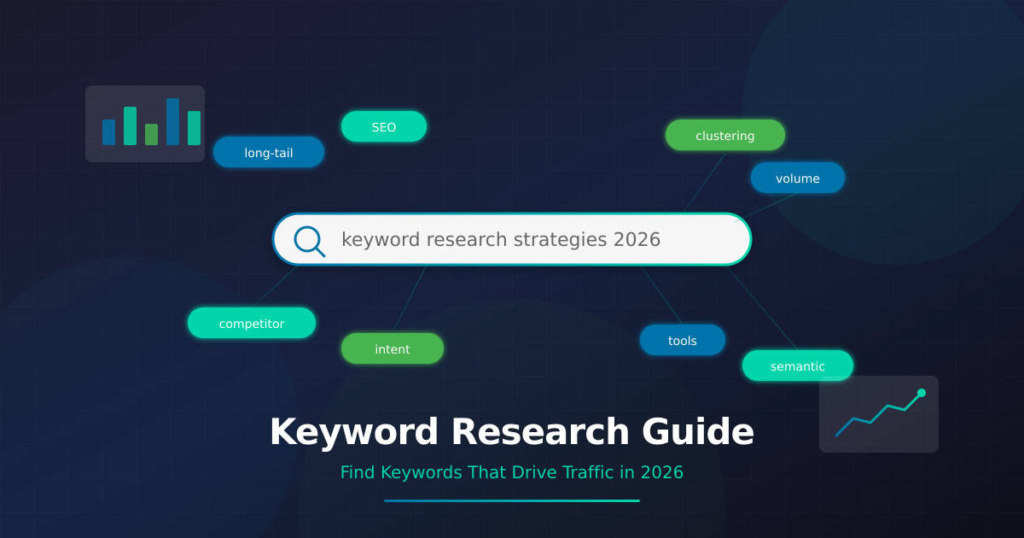
Keyword research is still the backbone of any solid search strategy. If you don’t know the exact phrasing your audience uses, you are essentially shooting in the dark.
Keyword tools help you uncover relevant search queries while giving you a reality check on search volume, keyword difficulty, intent, and historical trends. Instead of throwing all your energy behind massive, hyper-competitive terms, a smart strategy balances three distinct layers:
| Keyword Type | What It Means | Real-World Example | Why It Matters |
| Primary Keyword | The core, high-level topic you are targeting. | “SEO tools” | Drives high traffic, but competition is fierce and intent is broad. |
| Long-Tail Keyword | Specific phrases with lower volume but crystal-clear intent. | “best technical SEO tools for Shopify” | Easier to rank for; attracts visitors ready to convert or take action. |
| Related / LSI Keywords | Supporting terms and contextually relevant concepts. | “site audit,” “backlink checker,” “rank tracking” | Helps search engines understand that your page covers the topic thoroughly. |
Real talk: targeting a keyword with 50,000 monthly searches sounds great on paper, but if the searcher just wants a quick definition, it won’t grow your business. Focus on search intent over raw volume every single time.
2. Rank Tracking Tools: Keeping Tabs on Your Position
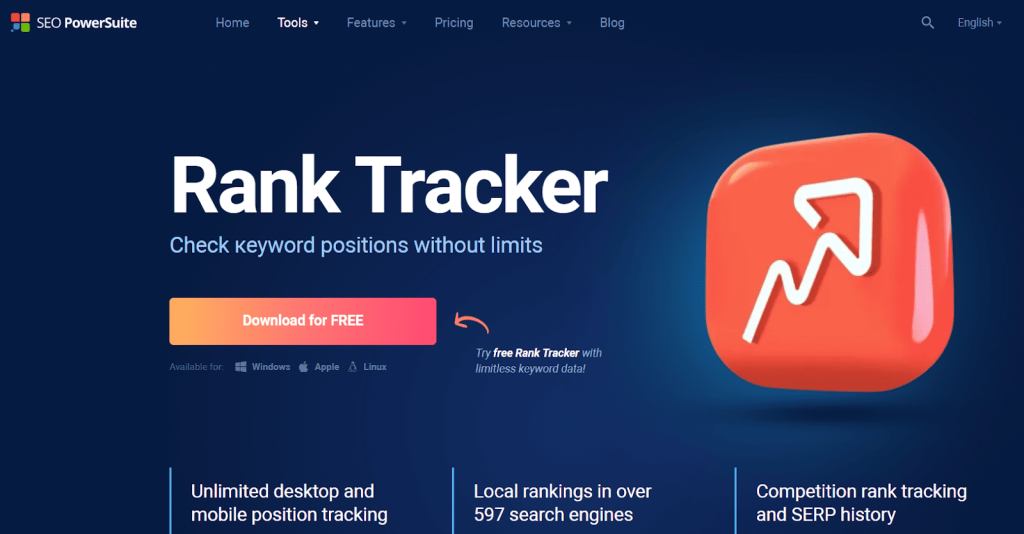
Search engine result pages (SERPs) move constantly. Algorithm updates, competitor moves, seasonal shifts, and personalized search results mean your rankings can bounce around from day to day.
Rank tracking tools keep an automated eye on your target keywords so you aren’t stuck manually Googling yourself every morning (which distorts your results anyway).
What Rank Trackers Help You Spot:
- Ranking Spikes: Identifying pages that suddenly gained traction so you can double down on what worked.
- Sudden Drops: Catching traffic drops early so you can check for broken code, lost links, or indexation issues.
- Competitor Movement: Seeing when a rival site launches new content and starts stealing your search real estate.
- SERP Feature Wins: Tracking whether your pages land in featured snippets, AI summaries, or “People Also Ask” boxes.
Checking your rankings every single hour will drive you crazy. Look for long-term trends over weeks and months rather than stressing over minor daily hiccups.
3. Technical SEO Audit Tools: Fixing the Engine Under the Hood
You can write the most engaging article in the world, but if search engine crawlers can’t read your site—or if your pages take eight seconds to load—you are fighting an uphill battle.
Technical audit tools act like a mechanic for your website. They crawl your site structure just like Googlebot does, flagging technical glitches before they tank your traffic.
                             TYPICAL TECHNICAL AUDIT FLOW
                                           │
  [ Site Crawler Scans Domain ] ───> [ Flags Critical Errors ] ───> [ Prioritizes Fixes ]
                                               │
             ┌─────────────────────────────────┼─────────────────────────────────┐
             ▼                                 ▼                                 ▼
   (Broken Links / 404s)             (Indexing & Canonical Issue)       (Slow Core Web Vitals)
Common Bugs Audit Tools Catch:
- Broken Links (404 Errors): Dead ends that hurt user experience and waste crawl budget.
- Indexing Blockers: Accidental
noindextags or misconfiguredrobots.txtfiles keeping good pages out of search results. - Duplicate Content & Canonical Issues: Multiple URLs serving the exact same content without telling search engines which version is the “master” copy.
- Page Speed & Core Web Vitals: Slow layout shifts or heavy image files that cause mobile visitors to bounce immediately.
- Mobile Usability Flaws: Tiny text, overlapping buttons, or unformatted tables that break on mobile screens.
Running a monthly technical scan keeps your site healthy and prevents small technical slips from turning into massive site-wide traffic drops.
4. Backlink Analysis Tools: Evaluating Your Site’s Reputation
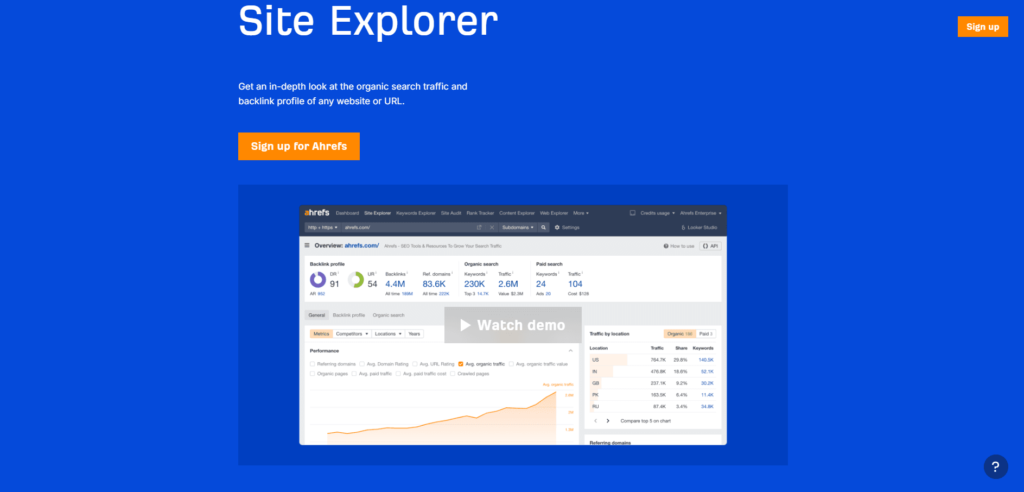
Backlinks (links from other websites pointing to yours) remain one of the strongest signals search engines use to measure authority and trust. Think of a backlink as an online vote of confidence.
Backlink tools give you a clear view of who is linking to you—and who is linking to your competitors.
[ External Trusted Site ] ─── ( High-Authority Backlink ) ───> [ Your Website ] ───> Higher Organic Trust
Key Metrics to Track:
- Referring Domains: The number of unique websites linking to you (100 links from 100 different sites is much stronger than 100 links from the exact same blog).
- Anchor Text Distribution: The visible text people click on to reach your site. If 90% of your anchor text looks like spammy, exact-match keywords, search engines might flag it as manipulative.
- New vs. Lost Links: Monitoring whether you are steadily earning new authority or losing hard-won links over time.
- Competitor Link Profiles: Rebuilding your competitors’ link sources by finding blogs, podcasts, directories, and resource pages that already link to your niche.
Forget about buying cheap, low-quality link packages on online marketplaces. Modern search engines are smart enough to ignore (or penalty-flag) artificial links. Focus on building genuine relationships, producing original data, and publishing content worth sharing.
5. Content Optimization Tools: Writing for Humans and Algorithms

Search engines want to serve pages that answer a user’s question completely, accurately, and clearly. Content optimization platforms analyze top-ranking pages for a given topic and highlight missing subtopics, related questions, and structural gaps.
However, there is a catch: Do not let software turn your writing into robot food.
                           THE CONTENT OPTIMIZATION BALANCE
                                          │
       ┌──────────────────────────────────┴──────────────────────────────────┐
       ▼                                                                     ▼
[ ALGORITHM REQUIREMENTS ]                                         [ HUMAN REQUIREMENTS ]
• Clear topical coverage                                          • Real-world experience & stories
• Natural keyword placement                                       • Engaging, conversational tone
• Structured headings (H2, H3)                                    • Skimmable bullets & comparison tables
• Answer target intent directly                                   • Zero robotic fluff or filler text
The best content workflows use tools to build a smart foundation—making sure key subtopics aren’t missed—while relying on real human writers to add personality, lived experience, original opinions, and clean formatting.
6. Competitor SEO Tools: Learning from What Works
You don’t have to guess what works in your niche; your competitors are already running live experiments every day. Competitor research tools show you the exact playbook your rivals are using to capture traffic.
What You Can Uncover:
- Top-Performing Pages: Finding out which specific articles or product pages drive 80% of your competitor’s traffic.
- Keyword Gaps: Discovering valuable, high-intent terms your competitors rank for that your site hasn’t written about yet.
- Content Formats: Checking whether top-ranking competitors use long-form guides, quick comparison tables, interactive calculators, or video embeds.
The goal here isn’t to copy-paste what someone else wrote. It’s to find their content gaps, spot what they missed, and publish something significantly more helpful, accurate, and easy to read.
7. Local SEO Tools: Winning Your Neighborhood
If you run a local business—like a plumbing service, medical practice, storefront, or law firm—broad national search metrics don’t matter much. You care about people searching for your services right down the street.
Local SEO tools focus heavily on geographic rankings, local map pack visibility, business directory listings (citations), and customer review management.
| Feature | How It Helps Local Businesses | Real-World Example |
| Geo-Grid Tracking | Shows how your site ranks block-by-block across a city map. | Tracking how your coffee shop ranks when someone searches “latte near me” 2 miles away vs. 10 miles away. |
| Listing Management | Syncs your Name, Address, and Phone number (NAP) across directories. | Ensuring your business hours and phone number match everywhere (Google Business Profile, Yelp, Apple Maps). |
| Review Monitoring | Alerts you when customers leave new reviews so you can respond fast. | Promptly thanking happy clients or resolving a negative review before it hurts your local reputation. |
For a local shop, ranking #1 in the local Google Map Pack for a query like “emergency plumber near me” is worth far more than thousands of casual readers on a generic blog post.
8. SEO Reporting Tools: Turning Data into Clear Insights
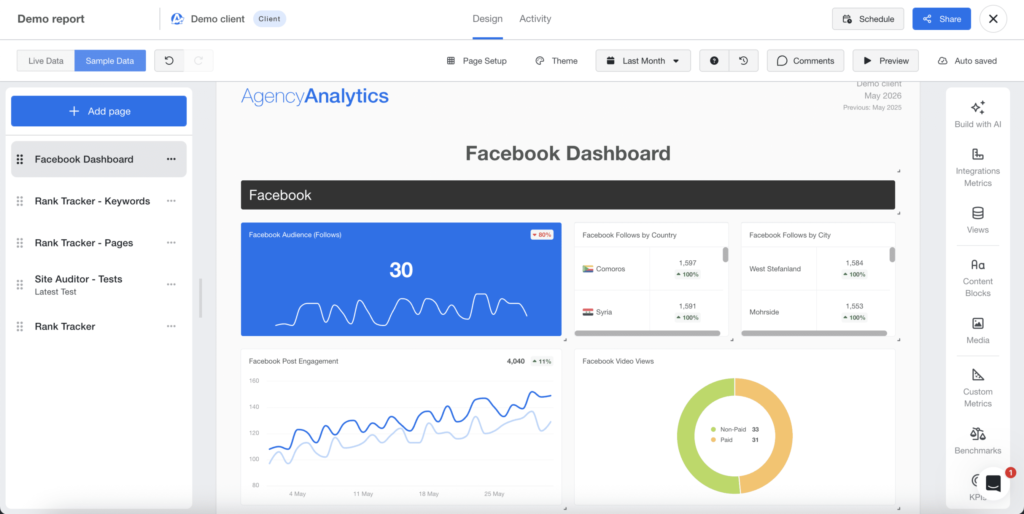
If you manage SEO for clients, executives, or internal stakeholders, pulling raw spreadsheets from five different tools is a nightmare. Reporting platforms pull data from multiple tools into clean, automated, visual dashboards.
A great SEO report skips vanity metrics and answers simple, outcome-driven business questions:
[ RAW METRICS ]                                     [ MEANINGFUL BUSINESS OUTCOMES ]
• Total Impressions                 ───>            • Are leads and sales going up?
• Average Rank Position             ───>            • Which pages convert the best visitors?
• Micro-fluctuations in traffic     ───>            • What is the actual ROI of our organic channel?
Good reports strip away complex technical jargon and present clear wins, current bottlenecks, and straightforward next steps.
How to Choose the Right Tool for Your Specific Setup
There is no universal “best” SEO platform. What works for an agency managing 50 client accounts will be overwhelming (and far too expensive) for a solo blogger.
                             CHOOSING YOUR MATCH
                                      │
  ┌─────────────────┬─────────────────┼─────────────────┬─────────────────┐
  ▼                 ▼                 ▼                 ▼                 ▼
[ BEGINNERS ]   [ BLOGGERS ]    [ E-COMMERCE ]     [ AGENCIES ]     [ ENTERPRISE ]
• User-friendly • Content research• Tech audits     • Scalable reports• Large crawling
• All-in-one    • Rank tracking  • Catalog structure• Multi-client ops • Custom APIs
- For Beginners: Pick a clean, intuitive all-in-one platform with clear step-by-step guides so you aren’t drowned in charts.
- For Bloggers & Creators: Prioritize strong keyword research, content optimization helpers, and internal link suggestions.
- For E-Commerce Stores: Focus on large-scale technical crawling (handling thousands of product pages), site architecture auditing, and competitor product tracking.
- For Agencies: You will need flexible client white-label reporting, multi-project management, historical data access, and team permission controls.
- For Enterprise Brands: Look for heavy-duty crawling capabilities, custom API access, cross-platform integrations, and deep data extraction features.
What Separates Great SEO Tools from Overhyped Ones?
Before handing over your credit card for a monthly subscription, evaluate tools against these core principles:
- Data Accuracy: Is the keyword volume and link data fresh and realistic, or is it pulled from outdated databases?
- Usability & UX: Can you quickly find the answer to a question, or do you have to navigate five confusing menus?
- Database Size: Does the tool have deep coverage for your specific market, geographic location, or niche?
- Integrations: Does it connect seamlessly with your web analytics, search console, and existing workflow stack?
- Pricing vs. Value: Does the platform offer a generous feature set on lower tiers, or does it hide basic everyday features behind ultra-expensive plan upgrades?
To get the most value out of your software without getting overwhelmed, follow this clear, circular routine:
Free vs. Paid Tools: What Do You Really Need?
You do not need to spend hundreds of dollars a month to see real organic growth.
Free Tools (like Google Search Console, Google Analytics, free keyword planners, and basic site crawlers) give you official, zero-cost data straight from the source. They are essential for beginners, small sites, and anyone getting their feet wet.
Paid Platforms become worth every penny when your site grows, when your time becomes more valuable than the subscription cost, or when you need deeper competitive intelligence, bulk rank tracking, and automated client reporting.
The Role of AI in Modern SEO Tools
AI is baked into almost every modern SEO dashboard. Smart features can now cluster thousands of keywords into logical groups, draft quick content briefs, analyze search intent variations, and summarize technical errors in plain English.
Real Talk on AI: Automated suggestions are great for speeding up administrative tasks, but blindly hitting “auto-optimize” or dumping raw AI-generated text onto your site won’t build long-term search authority.
Search engines and real human readers penalize generic, low-effort fluff. Use AI tools to speed up your research, organize your ideas, and streamline repetitive tasks—but keep human judgment, editorial standards, and real-world experience at the steering wheel.
Collaboration Tools 2026: Work Better Together With Smart Tools
Modern work is no longer limited to people sitting in the same office. Teams Collaboration…

Productivity 2026: Smart Strategies to Work Better & Faster
Being productive doesn’t mean filling every minute of the day with work. In 2026, productivity…

Tech Insights 2026: Latest Technology Trends & Innovations
Technology is no longer something that simply runs in the background. Tech Insights It is…

Remote Work Guide 2026: How to Stay Productive and Organized
Working remotely in 2026 isn’t just about sitting at your kitchen Remote Work Guide 2026:…
AI Tool Battles 2026: Compare the Best Tools Head-to-Head
You read a landing page, and it sounds incredible. You sign up, hand over your…

15 Smart Technology Trends to Watch in 2026
Smart technology is no longer just about connected devices—it is becoming the foundation of how…
FAQs
1. How many different SEO tools do I actually need?
For most site owners and marketers, one solid all-in-one tool paired with Google Search Console is more than enough. Having too many tools often leads to conflicting data, redundant subscription costs, and analysis paralysis.
2. Why do different SEO tools show completely different search volumes for the same keyword?
Every SEO tool uses its own proprietary data sources, clickstream panels, and estimation algorithms. Search volumes shown in tools are estimates, not exact figures. Focus on the relative difference between keywords (e.g., Keyword A has roughly 5x more interest than Keyword B) rather than treating the exact number as gospel.
3. Can an SEO tool automatically fix my website’s rankings?
No. SEO tools identify opportunities, track data, and flag errors—they don’t implement the strategy for you. You still have to write the content, update the code, fix the broken links, and earn the trust of your audience.
4. How long does it take to see results after using SEO tools to optimize a site?
SEO is a marathon, not a sprint. Depending on your domain’s age, competition level, and technical state, noticeable improvements typically take anywhere from 3 to 6 months after making meaningful content and technical updates.