Time management in 2026 feels like trying to hold water in your hands. You sit down on Monday morning with a hot cup of coffee, a fresh notebook, and grand plans. Then, out of nowhere, it’s Thursday evening. You are exhausted, your inbox is a disaster area, and the most important thing on your list hasn’t even been touched.
If this sounds like your reality, take a breath. You aren’t lazy, and you aren’t broken. You’re just operating in a world engineered to steal your focus. Real time management isn’t about becoming a cold, hyper-efficient robot who schedules every bathroom break down to the second. It’s about building a calm, intentional life where you actually have room to breathe, get work done, and step away without carrying a heavy blanket of guilt.
What Is Time Management, Really?
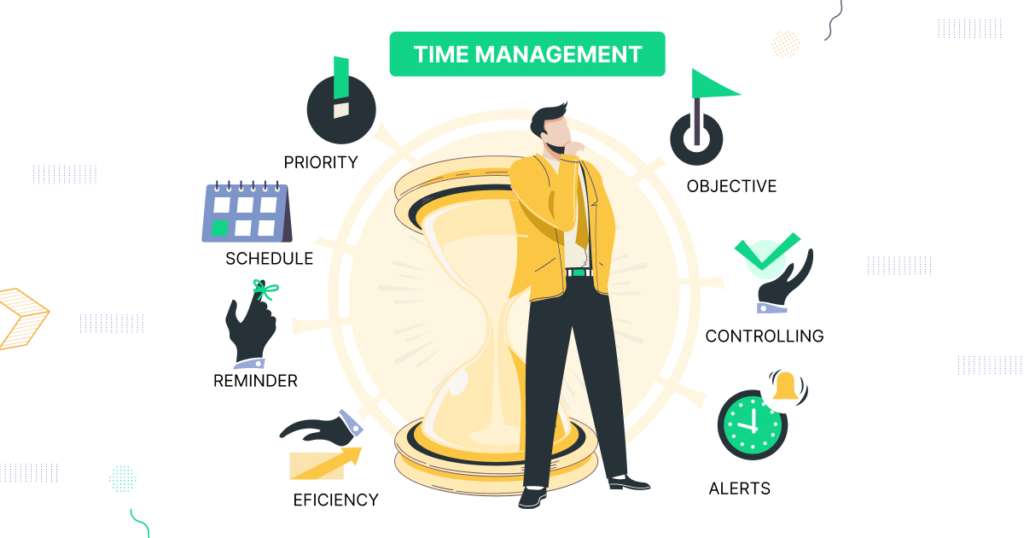
Forget the dry definitions from business textbooks. Time management is simply the art of knowing what matters right now and having the discipline to let everything else wait. It’s about making conscious choices instead of reacting to every notification like a trained laboratory mouse. It’s deciding that your energy, attention, and peace of mind are worth protecting.
When you manage your time well, you aren’t trying to squeeze twelve hours of labor into an eight-hour day. You are making sure that the five or six hours of actual work you do mean something.
Why Is Staying Focused So Hard in 2026?
We are living through an unprecedented attention crisis. In 2026, technology isn’t just a set of useful tools; it’s an environment we inhabit. Between AI assistants constantly pinging us, automated team updates, endless slack threads, social algorithms optimized to trigger our emotions, and personal texts, our brains are being pulled in twenty directions at once. When you try to work today, you aren’t just fighting your own tendency to procrastinate—you’re fighting teams of highly paid engineers whose only job is to keep your eyes on a screen.
Mastering your schedule today delivers genuine benefits:
- Less background panic: You stop going to bed worrying about what you forgot to do.
- Better quality work: Deep focus creates things you can actually be proud of.
- Actual free time: When you clock off, you are actually off—no ghost-checking emails at the dinner table.
- More self-respect: Keeping promises to yourself builds real, quiet confidence.
15 Human-Centered Strategies to Reclaim Your Day

1. Pick Your “Big Three” and Protect Them
Stop treating every task like an emergency. When everything is urgent, nothing is. Every morning, before you open your browser or look at your inbox, ask yourself: “If I could only finish three things today and then had to call it quits, which three would make me feel like the day was a win?” Write those three down on a sticky note. Stick it to your monitor. Do not let yourself get sucked into minor chores until those three have received your best energy.
2. Build a To-Do List That Doesn’t Hurt Your Feelings
Most to-do lists are just wish lists disguised as plans. Putting 25 complex items on a daily checklist is a recipe for feeling like a failure before lunch. Be brutally honest about what a human being can accomplish in a day.
Organize your list into three distinct buckets:
- Must Do: The non-negotiable, high-impact tasks (max 2-3 items).
- Should Do: Important items that can slide to tomorrow if life happens.
- Could Do: Low-priority tasks to tackle only if you find yourself with unexpected energy.
3. Give Your Hours a Job (Time Blocking)
If you leave your day wide open, other people will fill it for you. Time blocking is simply making an appointment with yourself to get specific work done. Instead of a vague intention like “I’ll work on the presentation today,” look at your calendar and block out 9:30 AM to 11:00 AM exclusively for that presentation. Treat that block with the same respect you would give a doctor’s appointment or a client meeting.

4. Work with Your Attention Span (The Modified Pomodoro)
The human brain wasn’t built to stare at spreadsheets for eight uninterrupted hours. If you struggle to get started, set a timer for 25 minutes. Tell yourself: “I only have to work on this one task until the timer goes off. If I want to quit after that, I can.” Usually, the hardest part is crossing the starting line. Once you get moving, momentum takes over. Take a 5-minute break to stretch, grab water, or stare out the window, then reset.
5. Stop Bragging About Multitasking
Multitasking is a myth. What your brain is actually doing is “context switching”—jumping rapidly between tasks, dropping context, and burning a massive amount of mental fuel in the process. It leaves you feeling wired, anxious, and surprisingly unproductive. Practice single-tasking. When you’re writing an email, just write the email. When you’re in a meeting, just listen to the meeting. Close unnecessary tabs and focus on one thing at a time.
6. Give Every Task a Clear, Small Finish Line
Vague goals invite procrastination. If your task list says “Work on taxes,” your brain will perceive it as a massive, unpleasant mountain and run toward easy distractions.
Break it down into micro-steps with explicit boundaries:
- Vague: “Deal with client issues.”
- Specific: “Draft a response to Sarah’s email regarding the launch delay before 11:30 AM.”
Small, concrete targets give your brain a clear target to hit and an immediate hit of satisfaction when crossed off.
7. Apply the Two-Minute Rule Wisely
If a task pops up that takes less than two minutes—like replying with a short confirmation, forwarding a document, or putting your dish in the dishwasher—do it right away. Storing tiny items in your memory or adding them to a list takes more mental bandwidth than just resolving them immediately. Just don’t let these quick tasks hijack your main focus sessions.
8. Put Your Phone Out of Sight
Your smartphone is designed by experts who understand human psychology better than you do. Expecting yourself to ignore it while it sits next to your keyboard, buzzing and lighting up, relies on willpower—and willpower is a finite resource. During focus sessions, put your phone in another room, throw it in a drawer, or use strict focus modes that block social apps. Give yourself permission to be unreachable for a couple of hours.

9. Group the Chores of Life (Task Batching)
Switching gears takes energy. Sending emails requires a different mindset than writing code, designing graphics, or analyzing financial data.
Group similar activities together and knock them out in dedicated blocks:
- Process all emails and messages twice a day (e.g., 11:00 AM and 4:00 PM).
- Make all phone calls back-to-back.
- Set aside one morning a week for administrative paperwork and invoicing.
By batching, you cut down on the warm-up time your brain needs every time it starts a new type of work.
10. Master the Gentle Art of Saying “No”
Saying “yes” to a low-priority request means saying “no” to your own priorities, your health, or your family time. Many people struggle with this because they want to be helpful, but overcommitting leads to burnt-out, rushed work. Practice saying no with grace and clarity: “I can’t take this on right now given my current priorities, but thank you for thinking of me.”
11. Stop Trying to Do It All Yourself
Delegation isn’t just for corporate CEOs; it’s a survival strategy for anyone feeling overwhelmed. Look at your workload and ask: “Am I the only person who can do this?” At work, train a colleague, share standard operating procedures, or hand off routine monitoring tasks. At home, share family management duties more evenly or hire help for tedious chores if your budget allows.
12. Keep Your Productivity Tools Stupidly Simple
It’s easy to fall into the app trap. You spend three days configuring an elaborate digital workspace with customized tags, colors, and automated workflows. It feels like work, but it’s really just productive procrastination. The best productivity system is the simplest one you will actually use consistently. A basic legal pad and a pen will beat a complex software setup if the software causes friction.
13. Treat Rest as Non-Negotiable
You are an organism, not a machine. You cannot sprint continuously without crashing. Taking regular, guilt-free breaks isn’t lazy; it’s an operational requirement for sustained performance. Step away from all screens during your breaks. Go outside for five minutes, stretch your tight shoulders, drink a glass of water, or grab a tea. Give your eyes and your brain a real chance to reset.

14. Have an Honest 5-Minute End-of-Day Debrief
Before closing your laptop at the end of the day, spend five minutes doing a quick reality check. Look at what you accomplished, note what fell through the cracks, and ask yourself why. Did a task take twice as long as expected? Did an unexpected crisis pop up? Use this time to draft tomorrow’s “Big Three” list so your future self can wake up with absolute clarity.
15. Honor Your Internal Clock
We all have natural energy peaks and valleys throughout the day. Some people are morning larks who can draft brilliant reports at 7:00 AM; others don’t hit their stride until mid-afternoon. Pay attention to your internal rhythms over the next week. Map your hardest, most creative tasks to your high-energy windows, and save routine activities like clearing your inbox for when your brain is naturally winding down.
Common Traps to Avoid
| Productivity Mistake | Why It Hurts You | Human-Centered Solution |
| Over-scheduling every minute | A single delay destroys your entire day, causing instant stress. | Leave 20-30% of your day open as buffer time for unexpected events. |
| Beating yourself up over delays | Guilt wastes energy and makes you avoid work even more. | Acknowledge the interruption, forgive yourself, and reset for the next task. |
| Confusing busyness with progress | Being exhausted just means you spent energy, not that you built something value. | Measure your day by impact (completed Big Three) rather than hours spent at a desk. |
| Ignoring physical warning signs | Skipping sleep and meals leads directly to cognitive burnout. | Treat basic physical health—sleep, movement, hydration—as primary productivity tools. |
A Gentle, Realistic Daily Blueprint
If all of this feels overwhelming, pick one thing to change today. Here is what a sensible, human-friendly daily flow looks like:
| Time Frame | Focus Area | Action Items |
| Morning | Intention & Deep Work | • Review your schedule over coffee. • Pick your top 3 non-negotiable tasks. • Tackle the hardest task first during peak focus hours. |
| Mid-Day | Maintenance & Check-ins | • Process morning emails in a single batch. • Take a real lunch break away from your workspace screen. • Handle scheduled meetings and quick team check-ins. |
| Afternoon | Secondary Focus & Admin | • Run a focused 50/10 Pomodoro session for Task #2 & #3. • Knock out quick, 2-minute administrative items. • Clear remaining messages during a final inbox check. |
| Evening | Shutdown & Recovery | • Spend 5 minutes reviewing wins and setting priorities. • Close all work tabs, shut down your desk, and disconnect completely. |
Time management isn’t a game you “win” by clearing your inbox to zero or finishing a checklist that never stops growing. There will always be more work to do, more emails to answer, and more projects to start.
The real secret to managing time in 2026 is learning to be okay with unfinished work. At the end of the day, close your laptop, walk away from your desk, and step into your life. The work will still be waiting for you tomorrow—and you’ll be much better equipped to handle it if you’re well-rested, calm, and in control.
Collaboration Tools 2026: Work Better Together With Smart Tools
Modern work is no longer limited to people sitting in the same office. Teams Collaboration…

Productivity 2026: Smart Strategies to Work Better & Faster
Being productive doesn’t mean filling every minute of the day with work. In 2026, productivity…

Tech Insights 2026: Latest Technology Trends & Innovations
Technology is no longer something that simply runs in the background. Tech Insights It is…

Remote Work Guide 2026: How to Stay Productive and Organized
Working remotely in 2026 isn’t just about sitting at your kitchen Remote Work Guide 2026:…
AI Tool Battles 2026: Compare the Best Tools Head-to-Head
You read a landing page, and it sounds incredible. You sign up, hand over your…

15 Smart Technology Trends to Watch in 2026
Smart technology is no longer just about connected devices—it is becoming the foundation of how…